
San Diego Hardscape Ideas: What $25K to $200K Builds


Most “hardscape ideas” articles give you a list of 30+ materials (gravel, bark, rubber mulch) and call it a day. That is not useful if you are actually planning a San Diego outdoor living project. You do not need to be told that gravel exists. You need to understand what the major hardscape elements are, how they work together in a complete project, and what they cost so you can plan your investment realistically.
This guide covers the eight hardscape elements that make up a complete outdoor living project in San Diego. For each one, we explain what it does, when it makes sense, what it costs installed, and how it connects to the rest of your project. Because the truth is, a paver patio by itself is just a slab of pretty rock. A paver patio with an outdoor kitchen, fire feature, pergola, and landscape lighting is an outdoor living room that changes how you use your home.
We build these projects every day across San Diego County. The numbers below are based on actual 2026 project data, not national averages.
Get a Free Hardscape Design Consultation |
1. Paver Patios and Walkways
The patio is the foundation of every outdoor living project. It defines the primary living zone, sets the design language for the entire yard, and serves as the surface on which everything else sits: your dining table, your outdoor kitchen, your fire pit, your lounge seating.
In San Diego, interlocking concrete pavers are the dominant patio material for high-end projects because they handle the county’s expansive clay soil better than poured concrete (which cracks), they are fully repairable if utilities need to be accessed underground, and they offer design flexibility that concrete cannot match.
A properly installed paver patio in San Diego requires 7.5 inches of excavation with 4 inches of compacted Class II base, 1 inch of bedding sand, the pavers themselves, edge restraints, and polymeric joint sand. This is an engineered system, not just decorative stone laid on dirt.
What it costs: Standard interlocking pavers run $21 to $36 per square foot installed. Premium pavers (Belgard, Angelus) run $25 to $40. Porcelain pavers run $30 to $45. A 600 to 1,000 square foot patio (the typical range for a San Diego backyard) costs $15,000 to $35,000 depending on material, complexity, and site conditions.
For a full cost breakdown, see our Concrete vs Pavers Cost Guide or use the Paver Cost Calculator.
2. Paver Driveways and Motor Courts
The driveway is the first hardscape element anyone sees when they approach your home. In San Diego’s affluent communities, a poured concrete driveway on an otherwise beautifully landscaped property is a missed opportunity. A paver driveway instantly elevates curb appeal and is one of the highest-return hardscape investments you can make.
Paver driveways require heavier engineering than patios because they carry vehicle loads. We excavate 9.5 inches for standard vehicular areas with 6 inches of Class II base compacted in 2-inch lifts. For RV-rated driveways (common in San Diego neighborhoods with side-yard RV access), we excavate 11.5 inches.
Motor courts (expanded driveway areas that provide turning room and guest parking) are a signature element on estate-level properties in Rancho Santa Fe, Del Mar, and La Jolla. A well-designed motor court eliminates the need for on-street guest parking and creates a grand arrival experience.
What it costs: Vehicular-rated interlocking pavers run $25 to $40 per square foot installed. A standard two-car driveway (400 to 600 square feet) costs $10,000 to $24,000. A full motor court (800 to 1,500+ square feet) costs $20,000 to $60,000+. Driveway projects that connect to the public right-of-way require an encroachment permit through the city.
3. Outdoor Kitchens
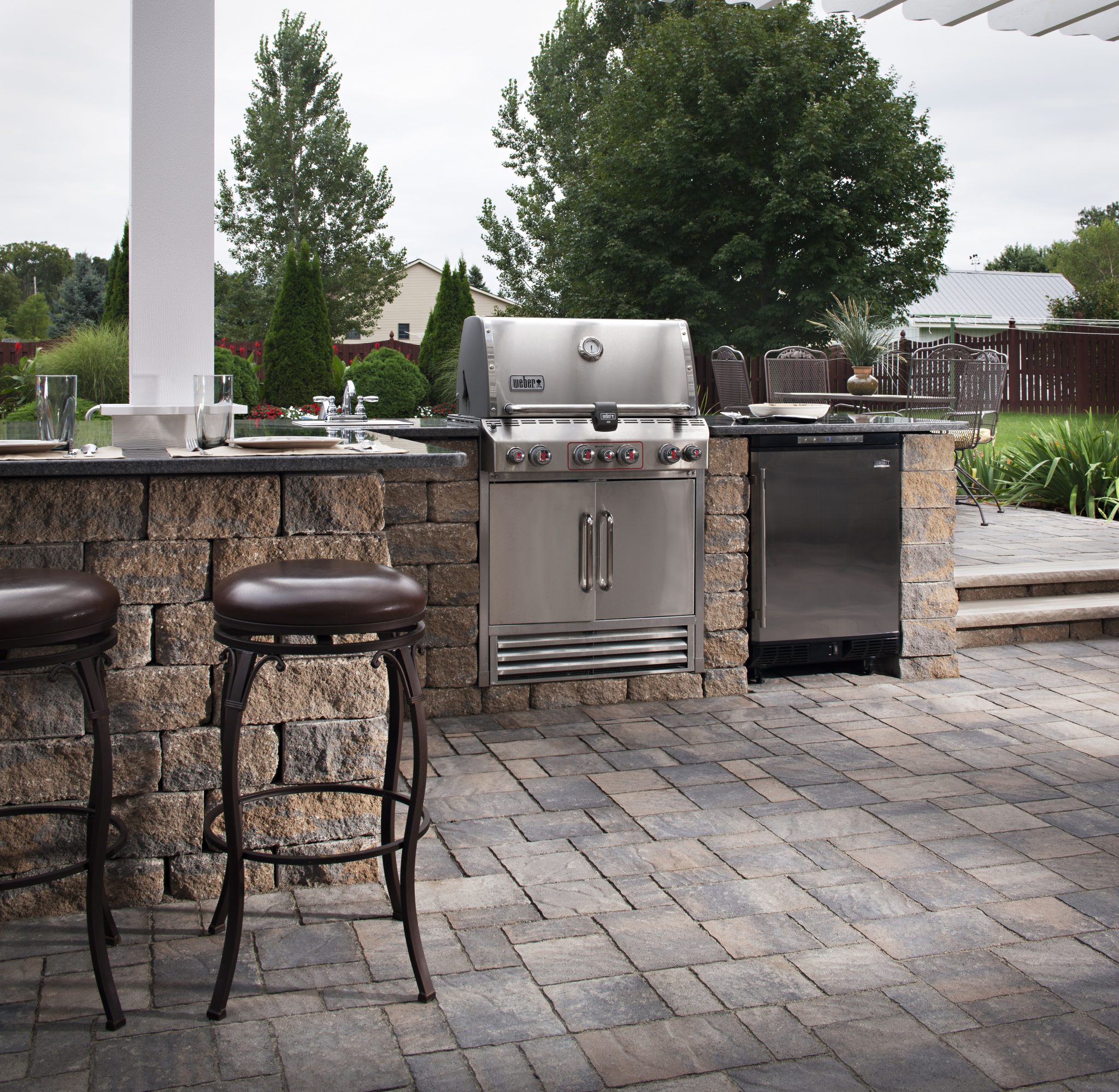
An outdoor kitchen transforms a patio from a sitting area into a true extension of your home. In San Diego, where the weather allows year-round outdoor dining, an outdoor kitchen is the single highest-impact upgrade you can add to a backyard project. It changes how your family uses the space on a daily basis, not just when entertaining.
A well-designed outdoor kitchen includes a built-in grill, countertop workspace, storage, and a concrete footing beneath the island. From there, the options scale up: refrigerator, sink with running water, pizza oven, kegerator, ice maker, side burner, warming drawer, and bar seating. The island itself is typically constructed from steel stud framing clad in stone veneer or stucco to match the home’s architecture, with a granite, quartz, or concrete countertop.
The key engineering consideration: outdoor kitchens require a poured concrete footing beneath the island, gas and electrical lines run to the location, and in most cases a water supply and drain for the sink. These utilities need to be planned before the paver surface is installed, not after. This is one of the primary reasons why outdoor living projects should be designed and built by a single contractor who coordinates all trades.
What it costs: A basic outdoor kitchen (built-in grill, 8 to 10 feet of counter, stone veneer, granite top) runs $15,000 to $25,000. A mid-range kitchen (grill, fridge, sink, 12 to 16 feet of counter, bar seating) runs $25,000 to $45,000. A full luxury kitchen (multiple cooking stations, pizza oven, kegerator, custom countertops, 16+ feet) runs $45,000 to $80,000+.
4. Fire Features
Fire features are the element that turns a patio into a destination after dark. In San Diego, where evenings are mild but cool enough to appreciate warmth for much of the year, a fire feature extends the usability of your outdoor space from daytime only to year-round, day and night.
There are three main categories:
Fire pits are the most common and most versatile option. A built-in fire pit (gas-fueled, with fire glass or lava rock) serves as a gathering point and conversation anchor. Round fire pits work well as a centerpiece for a circular seating arrangement. Linear fire pits (rectangular, often built into a seat wall) create a more modern, architectural feel. Gas fire pits require a gas line run to the location, which is why they need to be planned during the design phase.
Fireplaces are larger, more dramatic, and create a true focal wall in your outdoor living area. A fireplace anchors one end of the patio the way a TV wall anchors an indoor living room. They require a more substantial concrete footing and a chimney or vent structure. Fireplaces work best on larger patios where the scale of the structure does not overwhelm the space.
Fire and water features combine a fire element with a water feature (fire bowls over a water basin, fire running along the top of a water wall). These are premium design elements typically found on estate-level projects.
What it costs: A built-in gas fire pit runs $3,500 to $8,000. A gas fireplace runs $8,000 to $20,000. Fire and water combination features run $10,000 to $30,000+. All prices include gas line, footing, stone or paver veneer, and fire glass or burner. San Diego has specific regulations on fire features depending on your location. For details, see our Outdoor Fireplace and Fire Pit Rules for San Diego.
5. Shade Structures: Pergolas, Patio Covers, and Pavilions
In San Diego, shade is not a luxury. It is a functional requirement for a patio you will actually use during the 5 to 6 months of the year when midday sun makes an uncovered patio unbearable. The right shade structure also protects outdoor kitchen appliances, furniture cushions, and electronics from UV degradation.
There are four main options, each with a different balance of light, cost, and architectural impact:
Pergolas provide filtered shade through spaced rafters. They define the patio area architecturally without blocking all light. Standard wood or aluminum pergolas are the most affordable shade structure. The downside: pergolas do not provide full rain or sun protection.
Solid patio covers (attached to the house) provide complete shade and rain protection. They are essentially a roof extension over your patio. Solid covers make the space usable in any weather and protect everything beneath them from the elements.
Louvered pergolas have adjustable aluminum slats that rotate from fully open (like a pergola) to fully closed (like a solid cover). They offer the most flexibility but at a premium price point. Motorized louver systems can be controlled by remote or app.
Pavilions are freestanding covered structures (not attached to the house). They function as independent outdoor rooms and work well for large properties where the primary entertaining area is away from the house, such as near a pool or at the far end of the yard.
What it costs: Wood or aluminum pergolas run $8,000 to $20,000. Solid patio covers run $15,000 to $35,000. Louvered pergola systems run $25,000 to $60,000+. Pavilions run $20,000 to $50,000+. All prices are for professionally engineered and permitted structures. For a detailed comparison, see our Pergola vs Patio Cover vs Louvered vs Pavilion Comparison.
6. Retaining Walls and Seat Walls
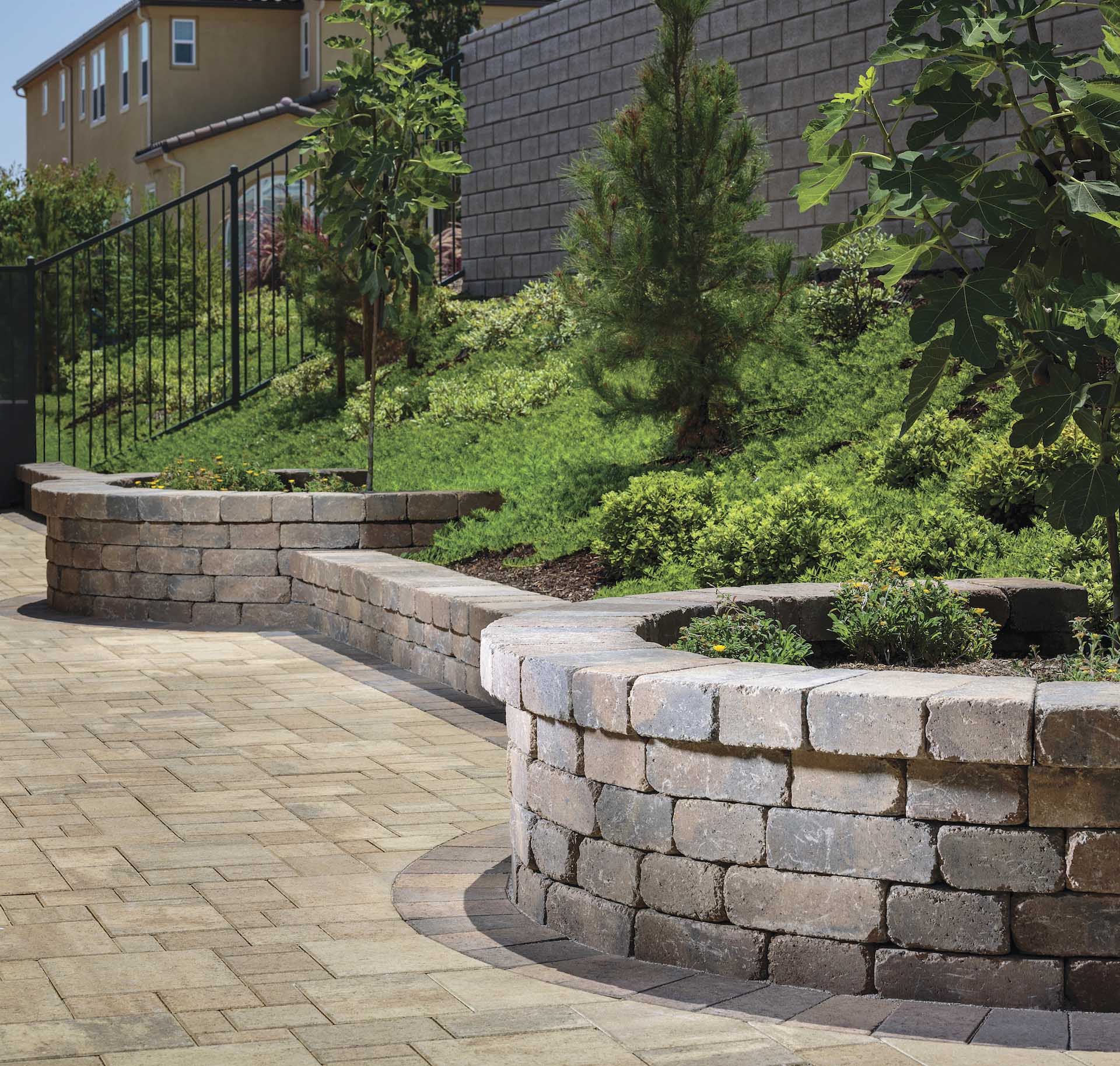
San Diego is not flat. Hillside properties, sloped backyards, and grade changes between the house and the lot line are extremely common, especially in inland communities like Poway, Escondido, El Cajon, Mt. Helix, and La Mesa, and in coastal hillside areas like Point Loma, La Jolla, and Del Mar. Retaining walls solve the grade change problem by creating level terraces where usable outdoor living space would otherwise be impossible.
Structural retaining walls hold back soil and create level changes. Walls over 3 feet in height require a building permit and typically require engineered plans from a licensed civil engineer. These walls require a poured concrete footing, rebar reinforcement, drainage behind the wall (a perforated pipe in a gravel bed), and proper waterproofing. Retaining walls are among the most engineering-intensive elements in a hardscape project.
Seat walls are shorter walls (typically 18 to 24 inches) that serve double duty: they define the edge of a patio or fire pit area while providing permanent, built-in seating. Seat walls are one of the most cost-effective ways to add seating capacity to an outdoor living area without cluttering the space with movable furniture. They also create a clean, architectural border between hardscape zones.
What it costs: Seat walls run $100 to $200 per linear foot depending on material and cap stone. Structural retaining walls run $50 to $120 per square face foot (the visible face area of the wall). A 50-foot-long, 4-foot-tall retaining wall (200 square face feet) costs $10,000 to $24,000 including footing, drainage, and engineering. Complex hillside projects with multiple terraced walls can run $40,000 to $100,000+.
7. Landscape Lighting
Lighting is the element that most homeowners underestimate and later wish they had invested more in. A $50,000 outdoor living project that goes dark at sunset is a $50,000 space you can only use half the time. Proper landscape lighting extends your outdoor living hours, creates ambiance, improves safety on walkways and stairs, and dramatically increases the visual impact of your hardscape after dark.
A complete landscape lighting plan for an outdoor living project typically includes: path lights along walkways and driveway edges, step lights built into retaining walls and seat walls, uplights on trees and architectural features, task lighting over the outdoor kitchen cooking area, ambient lighting under the pergola or patio cover, and accent lighting on water features or fire features.
All modern landscape lighting in San Diego is low-voltage LED, which uses minimal electricity and lasts 15 to 20+ years per fixture. The wiring is installed during construction (before the paver surface goes down), which is another reason to plan lighting during the design phase, not as an afterthought.
What it costs: A basic landscape lighting package (12 to 20 fixtures covering pathways and key accent points) runs $3,000 to $7,000. A comprehensive system (30 to 50+ fixtures covering the full patio, driveway, walkways, and planting areas) runs $8,000 to $18,000. Premium systems with smart controls, color-changing capability, and custom fixtures run $15,000 to $30,000+.
8. Pool Deck Hardscaping
If your project includes an existing pool or a new pool build, the deck surface around the pool is one of the most important hardscape decisions you will make. The pool deck gets more barefoot traffic than any other surface on your property, it is constantly wet, and it is exposed to pool chemicals and full sun year-round.
Interlocking pavers and porcelain pavers are the two best pool deck materials for San Diego. Both provide excellent slip resistance when wet (far superior to sealed concrete or stamped concrete), both are comfortable barefoot, and both handle the constant wet/dry cycle without degradation. Porcelain pavers have the added benefit of absorbing less heat than concrete pavers, which matters on south-facing pool decks that bake in summer sun.
Pool deck projects often happen alongside full backyard remodels. When the pool deck is being redone, it makes sense to address the patio, outdoor kitchen, and fire feature at the same time because the grading, drainage, and base preparation for all of these elements need to work together as one system.
What it costs: Pool deck resurfacing with interlocking pavers runs $20 to $35 per square foot. Porcelain pavers run $30 to $45 per square foot. A typical pool deck (400 to 800 square feet) costs $8,000 to $28,000 depending on material, access, and whether the existing surface needs demolition and removal. For more, see our Pool Deck Paver Installer page.
What Full Projects Actually Cost in San Diego
Individual hardscape elements are useful to understand, but most San Diego homeowners are not installing a fire pit by itself. They are doing a full backyard or front-and-back remodel that combines multiple elements into one project. Here is what complete projects look like at different investment levels:
| Project Scope | Typical Elements | Cost Range |
|---|---|---|
| Backyard Patio + Fire Pit | 500 to 800 sq ft paver patio, gas fire pit, basic landscape lighting (10 to 15 fixtures), walkway | $25,000 to $45,000 |
| Backyard Outdoor Living | 800 to 1,200 sq ft patio, outdoor kitchen, fire pit, pergola, seat walls, lighting (20 to 30 fixtures) | $85,000 to $150,000 |
| Front Yard Remodel | Paver driveway, motor court, front walkway, entry patio, retaining wall, drought-tolerant planting, lighting | $40,000 to $90,000 |
| Full Front + Back Remodel | Driveway, motor court, walkways, patio, outdoor kitchen, fireplace, pergola or patio cover, retaining walls, pool deck, comprehensive lighting, planting | $180,000 to $400,000+ |
| Estate-Level Transformation | Full property: custom paver throughout, multiple entertaining zones, luxury outdoor kitchen, fireplace, pavilion, water features, retaining wall terracing, smart lighting, full landscape architecture | $400,000 to $600,000+ |
These ranges are real. They reflect what San Diego homeowners pay for complete, professionally designed and built outdoor living projects. The wide ranges within each tier reflect differences in paver material (standard vs porcelain), site conditions (flat lot vs hillside requiring retaining walls), and the specific selections made for kitchen appliances, shade structures, and lighting systems.
Why Design-Build Matters for Hardscape Projects
The biggest mistake homeowners make on large hardscape projects is hiring separate contractors for each element: one company for pavers, another for the outdoor kitchen, a third for the pergola, and a fourth for lighting. This approach creates three problems that always cost more in the end.
Coordination failures. The paver crew grades the patio without knowing where the outdoor kitchen gas line needs to run. The kitchen contractor cuts into the freshly laid paver surface to run utilities. The electrician trenches through the base for lighting wire after compaction is complete. Each trade undoes the previous trade’s work.
Drainage conflicts. Grading and drainage need to work as one system across the entire project. A patio graded by one contractor that drains toward a retaining wall built by another contractor creates a failure point. Water has to go somewhere, and if the full drainage plan is not designed before any construction starts, expensive problems follow.
Timeline chaos. With multiple contractors, nobody owns the schedule. Trade A finishes late, which delays Trade B, which pushes Trade C into the following month. The project that was supposed to take 6 weeks takes 4 months.
A design-build firm handles everything under one contract, one schedule, and one accountability structure. The designer, project manager, and all trades work from one plan that accounts for every utility run, every grade change, and every connection point before the first shovel hits the ground.
A $50,000 to $200,000 outdoor living project is one of the largest investments you will make in your home outside of the mortgage itself. The contractor you choose determines whether that investment delivers decades of value or years of problems.
Before signing any hardscape contract, demand proof of active CSLB licenses (C-27, D-06 & D-12) and $2M general liability insurance. Verify workers’ compensation coverage. Check for bond status. And run every contractor through our Contractor Vetting Playbook before committing a dollar.
The INSTALL-IT-DIRECT Standard
We are a design-build firm. We handle design, engineering, permitting, and construction for the complete project under one contract and one timeline. Every element described on this page is something we design and build in-house with our own crews and project managers.
Every project we build is backed by our written On-Time Completion Guarantee. We agree on a timeline before construction starts. If we miss the deadline due to delays on our end, we pay you a daily schedule credit. No other landscaping company in San Diego offers this. See our guarantee details.
We carry full workers’ compensation and general liability insurance that exceeds industry standards. We are fully licensed with the California CSLB (License #947643, C-27, D-06 & D-12 classifications), and we have completed over 6,000 projects across San Diego County since 2009.
Ready to Start Planning?
Schedule a free design consultation. We will walk your property, discuss how you want to use your outdoor space, and create a plan that brings it to life within your budget.
Schedule Your Free Consultation |
Use the Paver Cost Calculator |
Frequently Asked Questions
We design and build complete outdoor living projects across San Diego County, including Rancho Santa Fe, Del Mar, La Jolla, Carmel Valley, Encinitas, Carlsbad, Poway, Escondido, El Cajon, Santee, Scripps Ranch, Oceanside, San Marcos, Chula Vista, Coronado, and the surrounding coastal and inland communities.